Crab SVG Illustrations: A Designer's Real-World Review
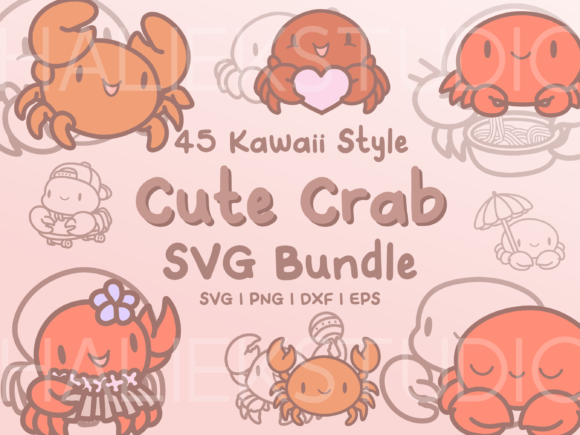
As a designer who has spent years translating digital concepts into tangible stitched goods, I approach every new machine embroidery design with a mix of excitement and skepticism. The market is flooded with generic assets, so finding a collection that truly translates well from screen to fabric is rare. Recently, I evaluated the Crab SVG Illustrations pack, a set containing 45 kawaii-style crab images. My goal was simple: determine if these Graphics could survive the transition from a clean vector file to a textured, threaded finished product.
First Impressions: Mood and Visual Personality
The first thing that strikes you about Crab SVG Illustrations is the distinct mood. These are not realistic marine biology studies; they are playful, rounded, and undeniably cute. The "kawaii" aesthetic relies heavily on large eyes, soft curves, and simplified shapes. However, there is a critical detail in the product description that every serious maker must note immediately: the actual files provided are black, single-layer line drawings. The vibrant, full-color images seen in the listing slides are merely examples of how the final result might look after coloring.
This distinction changes everything for an embroidery project. As a reviewer, I appreciate the honesty, but it means the creative burden falls entirely on the user. You are purchasing the skeleton of the design, not the flesh. For a craft business owner or an Etsy seller, this offers incredible flexibility. You can adapt the color palette to match seasonal trends, brand colors, or specific client requests without being locked into a pre-set scheme. The visual personality is charming, but its success depends entirely on your ability to execute the fill and outline strategies correctly.
Real-Life Application: From File to Fabric
To test the practical utility of these designs, I imagined a specific scenario: preparing a custom embroidered tote bag for a summer beach-themed boutique. Tote bags are a staple for small shop merchandise, often made from heavy cotton canvas. In this context, the single-layer line art of Crab SVG Illustrations presents both an opportunity and a challenge.
If I were to stitch these directly as a running stitch outline, the result would be delicate and dainty, perfect for a subtle accent on a sweatshirt embroidery project or a baby onesie. However, for a bold statement on a tote, a simple outline might feel too thin. This is where the nature of the embroidery file becomes crucial. Since the source is a line drawing, converting it into a robust satin stitch border requires careful digitizing. If you simply trace the lines, you risk thread breakage or gaps in the stitching if the curve radius is too tight.
I also considered using these for personalized gifts, such as a holiday pillow cover. The kawaii style fits perfectly with nursery decor or children's rooms. Imagine a soft fleece blanket featuring a cluster of these crabs in pastel thread colors. The simplicity of the line art ensures that even when scaled up, the design remains recognizable. Unlike complex, photo-realistic designs that lose clarity when enlarged, the geometric simplicity of these Illustrations holds its shape beautifully, making them ideal for larger hoop sizes where stitch density needs to be managed carefully to prevent puckering.
Navigating Challenges: Where Caution Is Required
While the potential is high, Crab SVG Illustrations is not a "set it and forget it" asset. There are specific scenarios where these designs require extra attention. First, consider small hoop sizes. Some of the crabs in the collection have intricate claws or tiny antennae. If you shrink the design to fit a 4x4 inch hoop, those fine details may disappear or turn into a muddy blob of thread. Always inspect the smallest elements before committing to a small scale.
Fabric texture is another major factor. On smooth fabrics like poplin or quilting cotton, the line work will shine. However, on highly textured fabrics like denim, wool, or thick towels, the thin lines of a single-layer drawing can get lost in the weave. In these cases, you might need to convert the design into an applique design concept, using the SVG as a template to cut felt or foam backing, then stitching over it. Alternatively, increasing the line weight significantly during the digitizing process is essential to maintain visibility.
Furthermore, dark fabrics present a unique hurdle. Since the base file is a black line drawing, stitching white or light-colored thread over black fabric works well for outlines. But if you plan to add fill stitches, you must ensure the contrast is sufficient. A dark blue fill on a navy sweatshirt will vanish. Always create a printable mockup in black and white to visualize the contrast before cutting any thread. Additionally, stretchy fabrics like jersey knit can distort the round, cute shapes of the crabs. Using the correct stabilizer is non-negotiable here to keep the design crisp and true to the original vector form.
Impact on Brand Value and Customer Trust
For creative entrepreneurs and apparel decorators, the quality of your design assets directly influences customer trust. A poorly executed embroidery job—where lines are jagged, threads are pulled, or details are missing—can ruin the perception of a handmade product. Crab SVG Illustrations offers a clean starting point, which is a huge advantage. Because the lines are simple and uncluttered, the margin for error is smaller than with complex, multi-layered designs.
When customers see a finished product with these crabs, they perceive professionalism. The kawaii style is universally appealing, boosting the giftability of items like embroidered patches or baby embroidery projects. It signals that the maker understands current trends and values aesthetics. However, this value is only realized if the execution matches the charm of the design. If you rush the digitizing process and ignore stitch density issues, the final result will look cheap, regardless of how cute the SVG file is.
Practical Designer Notes for Success
To get the most out of Crab SVG Illustrations, I recommend a disciplined workflow. First, always test the design on scrap fabric that mimics your final material. Check how the machine handles the sharp turns in the crab claws. Second, review your hoop size options. While some crabs are small, others might benefit from being enlarged to showcase their character. Third, confirm the licensing terms before selling commercial embroidery items. Ensure you have the right to sell physical goods made with these files, especially if you are building a small shop product line.
Finally, do not underestimate the power of thread colors. Since the file is a single layer, your choice of thread defines the entire look. Experiment with variegated threads to add depth to the shell or contrasting colors for the eyes. By treating Crab SVG Illustrations as a flexible foundation rather than a rigid template, you can create unique, high-quality pieces that stand out in a crowded market. Whether you are making a tote bag design for a local craft fair or a holiday embroidery gift for a friend, these graphics offer a solid, versatile base for your next great project.