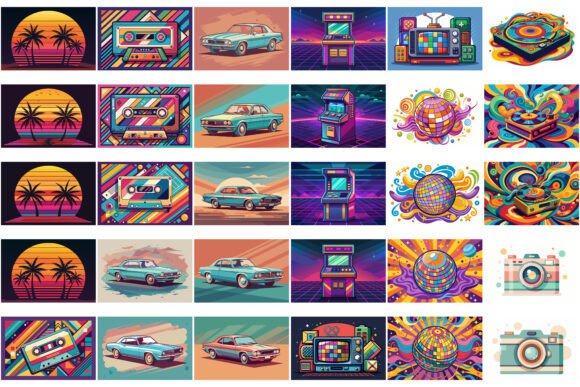
Retro Vector Illustrations for Embroidery
As a designer who has spent years translating digital art into tangible stitched goods, I approach every new asset with a critical eye. The market is flooded with generic clipart, so finding a collection like Retro Vector Illustrations that actually feels usable for real-world projects is refreshing. This package isn't just a bundle of pretty pictures; it represents a specific aesthetic mood that can elevate a handmade product from "crafty" to "boutique quality." Before diving into the technicals, let's talk about the vibe. These graphics scream 70s nostalgia with their warm color gradients and bold shapes, specifically the Vintage Sunset Palm Trees piece which immediately brings to mind summer festivals, beachside cafes, and relaxed lifestyle branding.
The First Impression: Mood and Visual Weight
When I first opened the files in my vector editor, the clean lines were immediately apparent. For an embroidery designer, this is crucial. Many retro-style designs are cluttered with unnecessary details that turn into muddy messes when converted to stitches. However, the illustrations here maintain strong silhouettes. The layout suggests they are designed to be read from a distance, which is perfect for custom apparel or tote bags where the design needs to pop against the fabric texture. The visual personality is confident and nostalgic without being kitschy. It feels like a design asset that belongs on a high-quality organic cotton sweatshirt or a sturdy canvas apron rather than a cheap promotional item.
Testing the Waters: A Real-World Project Scenario
To truly evaluate these assets, I imagined a specific client request. Let's say I am preparing a limited run of embroidered patches for a local surf shop opening next month. They want something that captures the "golden hour" feel of the coast. Using the Vintage Sunset Palm Trees Retro Illustration, I could see how the warm gradients would translate into thread colors. Instead of trying to replicate the smooth gradient perfectly—which often fails in machine embroidery—I would use the illustration as a guide to select five distinct thread shades. By simplifying the gradient into bands of orange, coral, deep purple, and teal, the design retains its retro charm while ensuring the stitch density remains manageable.
In this scenario, the tote bag design potential is also high. Imagine a natural canvas tote featuring the palm tree silhouette. The bold outlines of the vector file ensure that even if the fabric wrinkles slightly during stitching, the image remains recognizable. For an Etsy seller or small shop owner, this kind of clarity is vital. Customers browsing online need to instantly grasp the design style. If the Graphics look blurry or indistinct in a printable mockup, the sale is lost. These vectors provide the sharpness needed for professional-looking previews.
Navigating Fabric Challenges and Stitching Realities
While the aesthetic is strong, practical application requires careful planning. Not every surface works well with retro styles. On textured fabrics like heavy denim or thick wool, the fine details in some of the smaller illustrations might get lost. You must consider the fabric texture before committing to a project. Similarly, on stretchy fabrics used for baby clothes or fitted tees, you need to ensure the stabilizer is robust enough to prevent the design from distorting after washing.
One area where caution is advised is with very small hoop sizes. Some of the more intricate elements in the collection rely on negative space to define the shapes. If you try to shrink these down to fit a 4x4 inch hoop, the stitch density could become too high, leading to puckering or thread breakage. Always test the design on scrap fabric first. Check whether the running stitch outlining holds up or if it needs to be converted to a satin stitch for better definition on dark fabric backgrounds. Dark fabrics are particularly tricky with retro designs because the warm colors can sometimes disappear if the contrast isn't high enough. A quick black and white mockup comparison can save you hours of wasted thread.
Commercial Viability and Brand Consistency
For creative entrepreneurs and digital product sellers, consistency is key. Retro Vector Illustrations offers a cohesive set of 43 EPS, SVG, and JPG files, allowing you to build a unified brand identity across multiple products. Whether you are creating a line of holiday gifts, personalized nursery decor, or commercial embroidery for a boutique, having a consistent visual language builds customer trust. When a buyer sees your logo on a cap, then on a pillow cover, and finally on a kitchen towel, all sharing that same retro warmth, it reinforces the value of your handmade product.
This consistency extends to the finished product's perceived value. A well-executed sweatshirt embroidery using these assets looks expensive and intentional. It signals to the customer that the maker understands design principles and cares about quality. Conversely, a poorly executed design with mismatched thread colors or uneven fill stitch can make even the best vector file look amateurish. The difference lies in how you adapt the embroidery file to the physical constraints of the machine and material.
Practical Notes for the Designer
If you decide to integrate these design assets into your workflow, keep these practical tips in mind:
- Verify Licensing: Before selling any finished items or digital products, confirm the licensing terms included with the download. Ensure you have the right to use them for commercial embroidery projects.
- Stabilizer Selection: Use a tear-away stabilizer for stable fabrics like denim or canvas, but opt for a cut-away or wash-away mesh for stretchy knits to support the fill stitch areas.
- Color Testing: Do not rely solely on screen colors. Pull physical thread swatches to match the warm gradients. The way light hits polyester or rayon thread differs significantly from a monitor display.
- Hoop Size Confirmation: Measure your design against your available hoops. If the artwork is too large, do not simply scale it down; instead, crop or rearrange elements to maintain visual balance.
- Detail Inspection: Zoom in on the smallest corners and curves. Complex retro details may need to be simplified manually in your digitizing software to prevent bird nesting or skipped stitches.
Final Thoughts on Usability
Ultimately, Retro Vector Illustrations serves as a powerful tool for designers who understand the nuances of translating 2D art into 3D textiles. It is not a "plug-and-play" solution that guarantees perfection without effort, but rather a high-quality foundation for creating standout pieces. From embroidered patches for craft fairs to personalized gifts for weddings, the versatility of these images allows for creativity within a defined style. As long as you respect the limitations of your machine, choose the right fabric, and take the time to test your settings, these graphics can transform a simple garment into a cherished keepsake. For the serious crafter looking to expand their portfolio with timeless, nostalgic appeal, this collection delivers exactly what it promises: editable, vibrant, and professionally structured visuals ready for the needle.